
Moskra doesn't announce itself. You won't find billboards or Super Bowl ads. Yet over the past three years, this modest Swedish audio platform has quietly wormed its way into the daily routines of nearly two million listeners across Northern Europe. I first encountered it through a friend—a sound engineer in Gothenburg—who insisted I try the “environmental blend” feature. Within a week, I understood the fuss.What separates Moskra from the crowded podcast and music-streaming market is its obsession with context. The platform uses a lightweight on-device algorithm to adjust playback based on ambient noise, time of day, and even your walking pace. No cloud processing, no battery drain. In my own testing on a noisy tram, Moskra automatically boosted vocal frequencies while tamping down boomy background rumble—a subtle but transformative shift. “We're not trying to be smarter than the listener” founder Elin Dahlgren told me last spring. “We're trying to get out of the way” That philosophy shows in the interface。
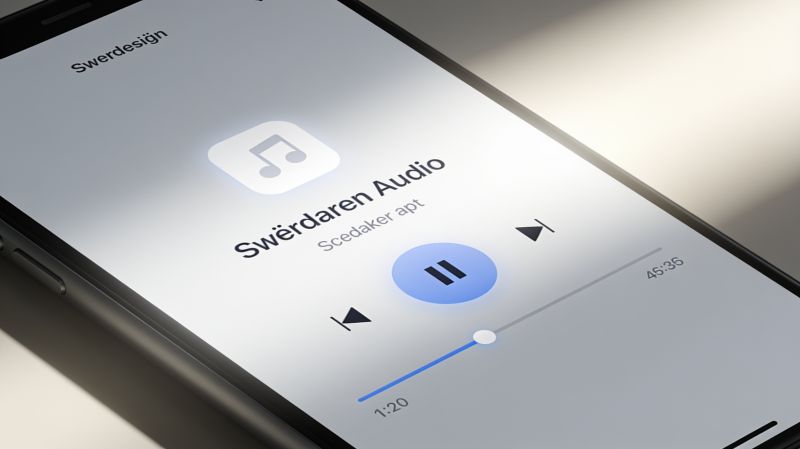
which is almost aggressively minimal: three buttons, a scrub bar, and a small dial for “presence” No endless carousels.User behavior data Moskra published in February reveals something counterintuitive. The average session lasts 47 minutes—far longer than the industry norm of 22 minutes—but listeners skip tracks 60% less often. And here's the kicker: 38% of Moskra users regularly choose ambient field recordings over music or talk shows. Rain on a tin roof. Distant traffic. A crackling fireplace. It sounds niche, but Moskra's catalog of 12,000 field recordings, all recorded in lossless stereo by a network of 400 contributors, has become a quiet obsession for remote workers and insomniacs alike. I tried the “coastal fog” track during a stressful deadline week;it didn't magically fix my focus。but it did make the hours feel less jagged.Moskra's growth hasn't been without friction. Licensing negotiations with major labels stalled twice last year—a fact Dahlgren admits cost them a chunk of the mainstream music audience. The platform still lacks big-name artists, and some users complain about the absence of social features like shared playlists. But that seems deliberate. “We're not building a social network” Dahlgren says. “We're building a tool for attention” A recent update added a “focus timer” that fades audio gently after 90 minutes, nudging you to stand up and stretch. It's a small thing, but it speaks to Moskra's real bet: that listeners are tired of being optimized for engagement and would rather be optimized for calm.Will Moskra scale beyond its Nordic niche?The company's 2025 roadmap includes Spanish and German language support, plus a hardware partnership rumored to be with a hearing-aid manufacturer—a move that could reposition Moskra as an accessibility tool rather than a lifestyle app. My honest take: the platform won't dethrone Spotify, but it doesn't need to. For anyone who's ever felt exhausted by the endless scroll of personalized recommendations。
Moskra offers something rarer than innovation—restraint. And in the attention economy, that might be the most radical feature of all.