henyang is pushing its urban frontier eastward, turning Shenyang Eastward Expansion from a planning phrase into a visible transformation of roads, housing districts。industrial parks and public facilities. New construction is spreading beyond the established central neighborhoods, while transport links are being extended to connect emerging communities with the city’s traditional commercial core. The shift reflects a practical problem: Shenyang needs more room for modern industries and population growth, but it also needs to avoid repeating the disconnected development seen in some peripheral districts. Shenyang Eastward Expansion is therefore being watched not only as a land-use strategy, but as a test of how a major northeastern city can rebuild its economic momentum.
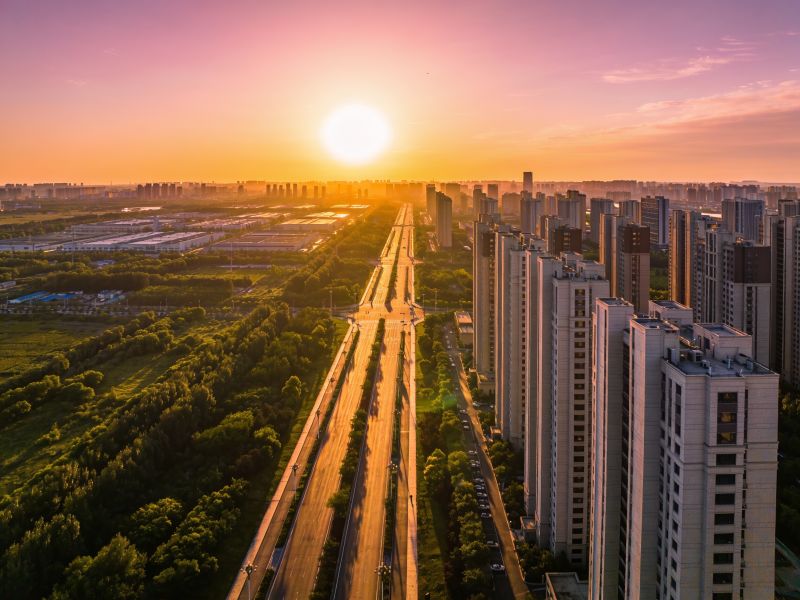
The eastern corridor has several advantages. Compared with the densely developed center, it offers larger parcels of land, wider avenues and room for factories, research facilities and residential compounds to be planned together. Local officials have linked the expansion with advanced manufacturing, automobile-related businesses, logistics and technology services, sectors that require space and reliable access. In practical terms, a company deciding where to establish a new workshop may care less about the city’s skyline than about the distance to an expressway, the availability of skilled workers and the time needed to move components. Shenyang Eastward Expansion addresses those concerns by placing employment。transport and housing within a broader development zone. The result, however, will depend on whether businesses arrive at the same pace as roads and apartment buildings.Transport remains the clearest measure of progress. On the eastern edge, a newly widened road can change a commute almost overnight, yet a road alone does not create a functioning urban district. Residents need frequent buses, dependable rail connections。schools, clinics and retail services. Several neighborhoods built during earlier waves of expansion struggled because residents had modern apartments but few nearby jobs or daily amenities. That experience has shaped the discussion around Shenyang Eastward Expansion. Planners are increasingly emphasizing mixed-use districts and links between residential areas and employment centers. A parent living on the eastern fringe may judge the project by the length of the morning school run, while a factory manager may focus on freight access. Both perspectives matter, and both expose whether Shenyang Eastward Expansion is producing a city or merely extending its footprint.The economic case is tied to Shenyang’s wider effort to strengthen its role as a manufacturing and transportation hub. The city has long carried the industrial legacy of Northeast China。including heavy equipment and automobile production. Eastward development gives that legacy a new physical setting, with modern facilities replacing aging industrial patterns and more flexible land for emerging companies. Yet the approach carries risks. Rapid property construction could create excess housing if population and jobs fail to follow. Public investment may also become uneven, leaving some districts with attractive boulevards but weak commercial activity. For Shenyang Eastward Expansion to work, officials will have to measure occupancy, business formation and commuting patterns rather than relying on construction volume as a sign of success. Empty storefronts are a more honest indicator than ceremonial openings.There is also an environmental and social dimension to the project. Expanding eastward can reduce pressure on the historic core, but it may consume farmland, increase car dependence and separate longtime communities from familiar services. The most successful parts of Shenyang Eastward Expansion will likely be those that preserve local waterways, improve green space and give residents reasons to stay beyond the appeal of a new apartment. Small details can shape public opinion: shaded sidewalks, a market within walking distance, a bus that arrives on time, or a clinic that does not require a cross-city trip. Shenyang Eastward Expansion has the scale to alter the city’s economic geography, but its lasting credibility will be decided at street level. If the eastern districts gain real jobs。
useful services and a recognizable neighborhood identity, the expansion could become a durable second center. If not, it may remain a costly stretch of urban promise at the edge of the map.